Physical Address
4401 Shallowford Road, Suite 166 #5002
Roswell, GA 30075
Physical Address
4401 Shallowford Road, Suite 166 #5002
Roswell, GA 30075

Rushed decisions are expensive decisions. Whether it’s money, meals, or major life choices – waiting until the last minute always costs more.
We’ve all been there. The day before a deadline, scrambling to buy a gift, pay a bill, or figure out dinner and the only option left is the one that’s fastest, not smartest.
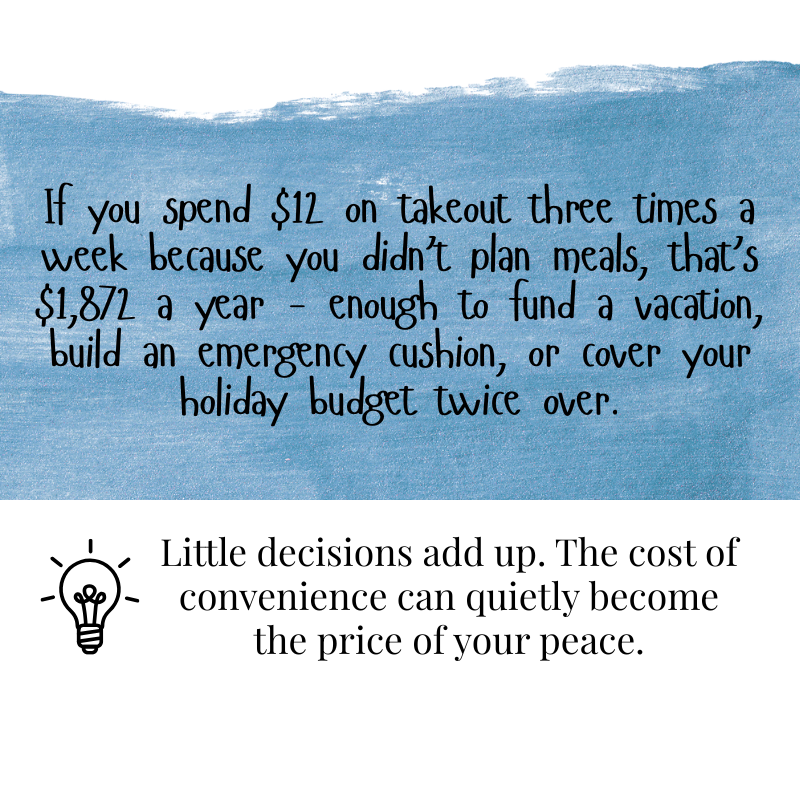
Last-minute living isn’t just stressful, it’s expensive. Most last-minute spending isn’t intentional – it’s a reaction to running out of time, not a choice we actually want to make. When time runs short, we trade peace for convenience:
And it’s not just about money, it’s about energy. Constantly reacting keeps us in survival mode. Planning ahead moves us back into intentional mode.
Strategies:
MAPS tie-in:
Last-minute living feels productive, like you’re juggling it all, but it’s actually a hidden form of burnout. Every “I’ll figure it out later” piles up, quietly draining your confidence and your cash.
Planning ahead isn’t about perfection; it’s about creating space. Space to breathe. Space to choose. Space to enjoy what you’ve worked for.
When you trade urgency for intention, you stop reacting to life and start designing it.
If you missed the rest of this series, you can start at Week One and work your way through the whole module at your own pace.
👉 This week, look ahead seven days. What decisions could you make today that will save money, time, or stress next week? Pick one and act on it now.
Q: Why is last-minute spending more expensive?
Because rushing limits your options. You pay extra for convenience, shipping, takeout, and quick fixes instead of choosing the smartest or most affordable option.
Q: How can I avoid last-minute spending?
Look ahead on your calendar, plan purchases early, automate recurring bills, and keep a small buffer fund so timing surprises don’t derail your budget.