Physical Address
4401 Shallowford Road, Suite 166 #5002
Roswell, GA 30075
Physical Address
4401 Shallowford Road, Suite 166 #5002
Roswell, GA 30075
The best gifts don’t always come wrapped in bows. They come from knowing what and who truly matters.
Gift-giving can be both joyful and exhausting. We want to show love, but somewhere between sale ads and shipping deadlines, the focus shifts from connection to consumption.
Most people don’t overspend because they’re careless, they overspend because they’re thoughtful. They want to make others happy. But the truth is, thoughtful doesn’t have to mean expensive.
Intentional giving means slowing down long enough to ask: What will matter after the wrapping paper is gone?
Sometimes the answer is time together.
Sometimes it’s words of affirmation.
Sometimes it’s a simple, useful gift that lightens someone’s load.
When you give with intention, you spend less money and create more meaning.
That’s the heart of intentional gift giving, spending with purpose so the meaning lasts longer than the receipt.
Strategies:
MAPS tie-in:
The most meaningful gifts rarely show up on receipts. They’re the moments of thoughtfulness that remind people they’re seen and valued.
When your giving flows from intention, not impulse, you stay generous and grounded. You model a kind of abundance that says: I have enough and I can share it with joy.
👉 Before you shop again, pause and list the five people who mean the most to you this season. For each one, write what you want your gift to say and let that guide what you buy (or make).
Q: What makes intentional gift giving different from traditional gift shopping?
Intentional gift giving focuses on connection and meaning, not price or pressure. It helps you choose gifts that reflect your values instead of reacting to ads or expectations.
Q: How do I give meaningful gifts without spending more money?
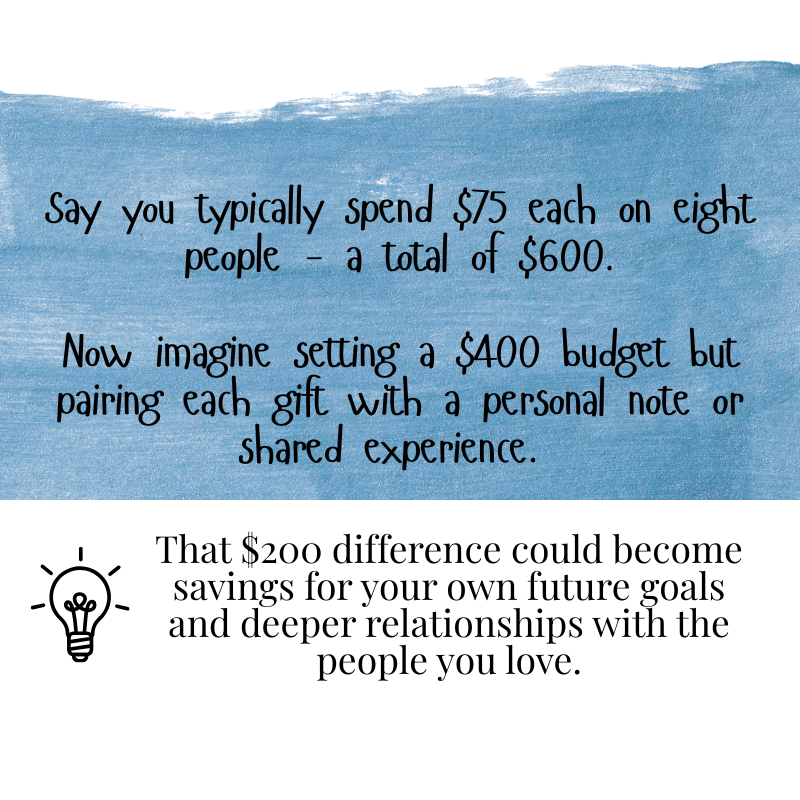
Start with the person, not the product. A personal note, shared experience, memory, or simple useful gift often matters more – and costs less – than anything flashy.
Q: How does the MAPS framework fit into intentional gift giving?
MAPS helps you stay aligned: