Physical Address
4401 Shallowford Road, Suite 166 #5002
Roswell, GA 30075
Physical Address
4401 Shallowford Road, Suite 166 #5002
Roswell, GA 30075

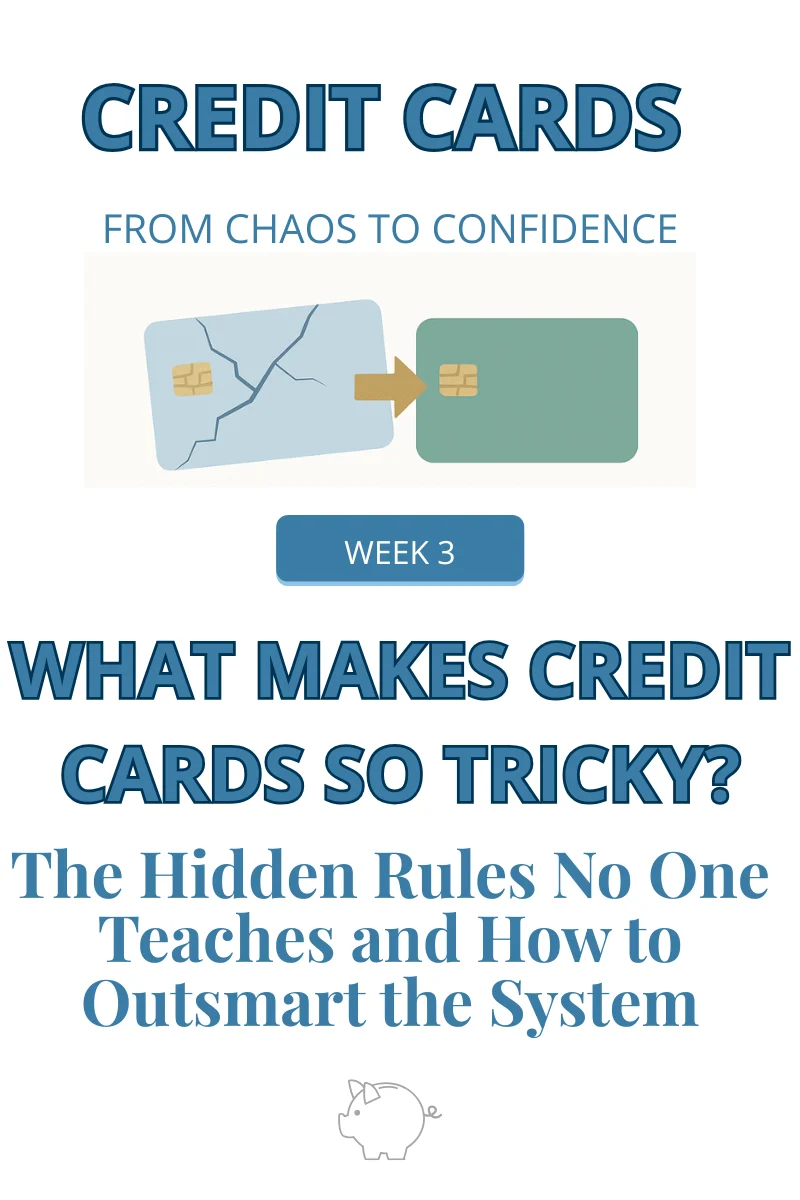
If credit cards are so dangerous, why do we all have them? And if they’re so helpful, why do so many of us end up in debt? Let’s talk about why credit cards are confusing on purpose – and what you can do about it.
We Make Money Make Sense
Credit cards are one of the few financial tools that can either help you build wealth or wreck your future. And they don’t come with a manual.
They’re marketed as:
But behind the perks? There’s:
It’s not that people are bad with money – it’s that credit card systems are built to profit from confusion.
We used to think we were doing okay if we paid more than the minimum. But the interest just kept adding up. The bill wasn’t shrinking.
And then there were months when we couldn’t pay extra at all – so we convinced ourselves, “At least we’re not late.” Meanwhile, the balance was quietly growing.
The system was working exactly how it was designed: to make us feel like we were staying afloat while slowly sinking.
Here’s what we wish we’d understood sooner:
So we made a plan:
That’s what changed everything.
Credit card debt thrives in chaos. Clarity is your power.
When you combine clarity with consistency, you get control. And that’s when things start to shift.
Next week, we’re breaking down the repayment strategies that actually work – snowball vs avalanche, balance transfers, and more. You don’t want to miss it.
If you’ve ever felt confused by your credit card statement or surprised by your balance, you’re not alone. Drop a comment and tell us what tripped you up – or what finally made it make sense.
Don’t forget to subscribe and follow along. You’re not just learning about credit – you’re building a system that works for you.
Until then, keep it simple, stay intentional… and follow your MAPS.
At Economic Simplicity, we share tools and stories to help make money make sense – but it’s not personal financial advice. Always do what’s right for your unique situation, and consider talking with a licensed professional you trust.